Licensed VoIP cabling and phone system wiring for commercial businesses across Los Angeles County. New IP phone deployments, analog-to-VoIP migrations, and legacy phone system extensions — installed to TIA-568 standards, certified, and fully documented.
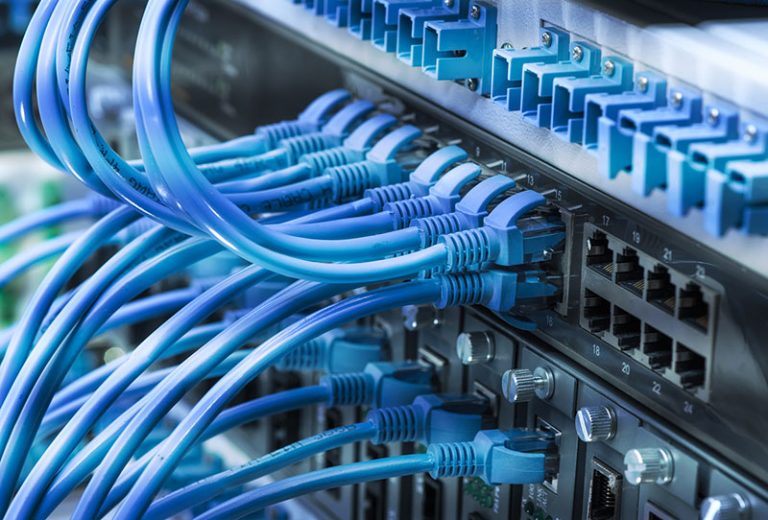
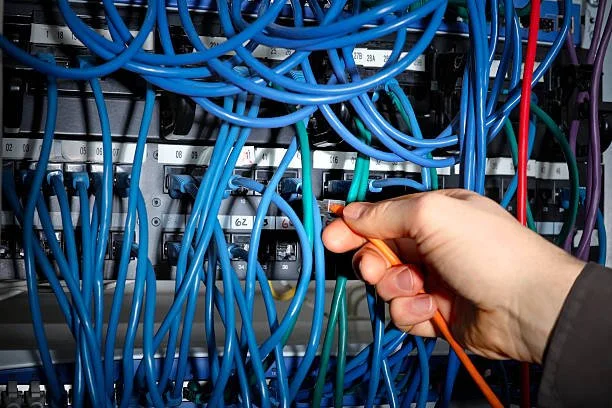
Messy wiring closets and cable runs organized, labeled, and documented properly for long-term maintainability.
Cable Management Installation
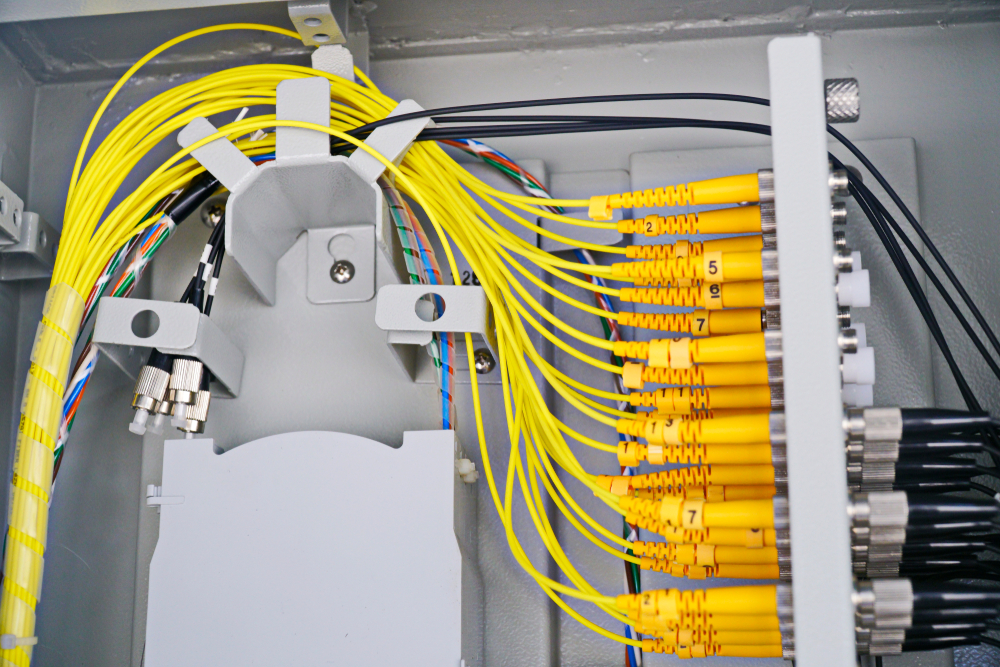
Wiring Closet Cleanup & Remediation
Cable Labeling & Documentation
VoIP vs Analog Phone Systems — What Your Los Angeles Business Needs to Know
The majority of Los Angeles businesses have made the switch from analog phone systems to Voice over IP (VoIP) — and many more are migrating now. The difference in cabling requirements is fundamental: analog phones use dedicated telephone cable (Cat3 or older two-pair wiring), while IP phones use standard Cat6 structured cabling and draw power over that cable via PoE.
This changes who should do the work. Traditional telephone wiring was done by telco technicians who didn’t necessarily certify to data cabling standards. VoIP cabling is data cabling — same Cat6 infrastructure as your computer network, governed by TIA-568, and a poorly terminated VoIP drop causes the same intermittent failures and dropped calls as a poorly terminated data drop.
We install both — properly. Whether you need Cat6 drops for a new Cisco or RingCentral VoIP deployment, analog wiring for a legacy Avaya or Nortel system, or the infrastructure for a full analog-to-VoIP migration, our C-7 licensed technicians install it to the right standard for the system it serves. At LA Data Cabling Installation, we provide reliable VoIP phone system cabling solutions designed for modern business communication.
VoIP Phone Systems
Runs over standard Cat5e / Cat6 structured cabling
Phone powered by PoE — no separate power supply at desk
The same cable drop can serve data and voice on different VLANs
One cable type for the whole office — simpler moves & changes
Far lower per-line cost with cloud or on-premise VoIP PBX
Requires certified Cat6 cabling and PoE switches at the IDF
Analog / Legacy Phone Systems
Uses two-pair or four-pair telephone cable (Cat3 or legacy 25-pair)
Requires dedicated telephone wiring from MDF cross-connect to each station
Typically uses 66-block or 110-block punch-down at distribution point
Power carried on the line from the PBX — no PoE infrastructure needed
Common in older LA buildings with legacy Avaya, Nortel, or NEC PBX systems
Often requires re-documentation when systems are extended
VoIP Phone Cabling Installation Los Angeles
VoIP phone cabling is structured cabling work — the same Cat6 infrastructure that serves your computers, deployed to your phone locations. Done right, every IP phone drop is a certified Cat6 home run delivering reliable PoE power and stable network connectivity. Done wrong, you get intermittent call quality and dropped connections that are almost impossible to diagnose without proper test equipment.
We install Cat6 VoIP cabling for commercial businesses across Los Angeles — from a 10-phone single-floor office in Santa Monica to a 200-phone multi-floor deployment in a DTLA high-rise. Every drop is a dedicated home run back to the IDF patch panel, terminated to TIA-568B standard, tested with a Fluke DSX-8000 CableAnalyzer, and labelled to your phone system’s numbering convention
Cat6 Home Run Drops
Every IP phone gets a dedicated Cat6 home run back to the IDF patch panel — no daisy-chaining, no splits. Each run is terminated to TIA-568B and certified before the phone is deployed.
PoE Infrastructure Coordination
IP phones draw 6–13W via PoE (802.3af). We document the port map so your IT team or phone system installer knows exactly which patch panel port connects to which phone location.
Combo Data + Voice Drops
Many LA offices want a single outlet with two Cat6 ports — one for the computer, one for the phone. We install dual-port faceplates, two home runs per location, documented in the port map.
Conference Room Cabling
Conference room phone cabling for tabletop conference units, ceiling microphone arrays, and integrated AV/phone systems. Correct cable placement to match the furniture layout.
Reception & Lobby Drops
Reception desk and lobby phone drops in high-visibility locations where outlet placement and faceplate appearance matter. Quality faceplates and clean cable routing through reception furniture.
IDF Patch Panel Termination
All VoIP home runs terminated at the IDF patch panel, labelled to your phone numbering convention, documented in a port map spreadsheet aligned with your phone vendor’s provisioning process.
What’s Included
What’s Included
Cat6 (CMP plenum-rated where required) home run from IDF to each phone location
Faceplate and keystone jack installation (single, dual, or quad ports as required)
Patch panel termination at IDF, labelled to your phone numbering convention
TIA-568.2-D Level IV certification test on every run
Port map spreadsheet: patch panel port → cable ID → phone location
As-built floor plan with all phone drop locations marked
Photo documentation of IDF panel and outlet locations
CATEGORY
SPEED
POE SUPPORT
VOIP PHONES
OUR RECOMMENDATION
Cat5e
1 Gbps
PoE / PoE+
All standard IP phones
Minimum acceptable — we prefer Cat6
Cat6
1 Gbps
PoE / PoE+
All standard IP phones
Our default for all LA VoIP installs
Cat6A
10 Gbps
PoE++
All IP phones + future WAPs
Required if drop also serves a WiFi 6E AP
Analog & Legacy Phone System Wiring Los Angeles
Legacy analog telephone systems are still actively used in thousands of Los Angeles commercial buildings. Many have Avaya, Nortel, NEC, or Panasonic PBX systems that aren’t being replaced — they work, and the business has no appetite for a full VoIP migration. Others maintain analog lines for fax machines, elevator phones, emergency lines, and credit card terminals that can’t go to IP.
We install, extend, repair, and document analog telephone wiring for Los Angeles businesses. Whether you need new station drops added to an existing PBX, a 66-block cleaned up and documented, or a demarcation point moved after a building renovation, our technicians understand traditional telephone infrastructure as well as modern structured cabling.
New Station Wiring
New telephone station drops using two-pair or four-pair telephone cable, routed through building pathways and terminated at the PBX cross-connect. All runs labelled and documented to match your PBX station numbering.
66-Block & 110-Block Work
Punch-down termination, cross-connect jumper installation, and documentation at 66M1-50 blocks and 110-type connecting blocks. Properly dressed and labelled — not the unlabelled spaghetti common in older LA telecom closets.
25-Pair Backbone Runs
25-pair and 50-pair telephone cable for multi-floor distribution in buildings with central PBX infrastructure. Properly supported, labelled, and cross-referenced to the block documentation.
Fax & Dedicated Line Wiring
Dedicated analog runs for fax machines, credit card terminals, door access intercoms, elevator phones, and POTS lines that cannot be migrated to VoIP. Properly isolated from data cabling and labelled to service type.
Demarcation Extension
Inside wire extension from AT&T, Spectrum, or other carrier’s demarcation point to your PBX or distribution cross-connect. Common in LA multi-tenant buildings where the MPOE is in a shared telecom room.
Legacy System Troubleshooting
Tracing and troubleshooting analog telephone wiring issues — noisy lines, intermittent connections, crossed pairs, and poorly documented legacy installations. Proper test equipment, not trial and error.
What’s Included
New station or distribution cable installation
66-block or 110-block punch-down termination
All runs labelled both ends to station or line ID
Cross-connect documentation updated or created
Continuity and pair verification testing
Wiring documentation showing every station run and block position
Analog to VoIP Migration Cabling Los Angeles
Migrating your Los Angeles office from analog to VoIP requires a complete re-cabling of every phone station — the old telephone cable cannot be reused for IP phones. The cabling work needs to be sequenced carefully with the phone system cutover to avoid leaving the business without phone service during transition.
We’ve managed the cabling side of analog-to-VoIP migrations for LA businesses of all sizes — small professional offices migrating to RingCentral or Vonage, mid-size companies deploying Cisco UCM or 3CX on-premise, and large enterprise transitions to Microsoft Teams Phone or Avaya Cloud Office. We coordinate with your phone system provider so that cutover day goes smoothly.
Pre-Migration Assessment
We assess your existing telephone infrastructure: active station count, locations, whether existing Cat5e/Cat6 data drops can serve VoIP instead of running new cable, and which legacy lines must stay on analog after migration.
New Cat6 Station Drops
New Cat6 home runs to every IP phone location — installed in advance of cutover day so the physical infrastructure is ready before the phone system changeover happens. Phased installation available to minimise disruption to the existing analog system.
PoE Switch Integration
Documentation and port labelling for PoE switch ports powering the new IP phones. We work with your IT team to ensure the patch panel port map aligns with their provisioning spreadsheet before cutover day.
Legacy Line Preservation
Identification and preservation of analog lines that must remain post-migration — fax machines, credit card terminals, elevator phones, ATA adapters, and any POTS lines serving fire alarm or security systems.
Old Wiring Removal
Removal of decommissioned telephone cable after the VoIP migration is complete — from station locations, through ceiling plenums, and back to the MDF/IDF. Reduces fire load in plenum spaces as required by NEC.
Cutover Day Coordination
We coordinate our installation schedule with your phone system provider and IT team so the cabling is ready before cutover day. Phased cutover available — floor-by-floor or zone-by-zone to match the migration plan.
Migration Cabling Deliverables
Pre-migration assessment: station inventory, reuse analysis, legacy line identification
New Cat6 drops to all IP phone locations — certified before cutover
Port map aligned with phone system provider’s provisioning spreadsheet
Legacy analog line documentation showing preserved lines and their purposes
As-built floor plan showing new VoIP drops and remaining analog infrastructure
Old cabling removal and disposal after migration completion (on request)
Data Cabling Services Across Los Angeles County
We serve commercial businesses throughout Los Angeles County and surrounding areas. Our crews are local — based in LA, familiar with every neighborhood.
Downtown LA
Santa Monica
Century City
West Hollywood
Culver City
Hollywood
Koreatown
Mid-Wilshire
Burbank
Glendale
Van Nuys
Sherman Oaks
Woodland Hills
Chatsworth
El Segundo
Torrance
Manhattan Beach
Hawthorne
Inglewood
Pasadena
Alhambra
City of Industry
Long Beach
San Pedro
Compton
VoIP & PBX Platforms We Install Cabling For in Los Angeles
We install the physical cabling infrastructure — Cat6 drops, patch panels, and port documentation — for all major VoIP and PBX platforms used in Los Angeles.
Cloud VoIP
RingCentral
The most widely deployed cloud VoIP platform among LA SMBs and mid-market businesses. Standard Cat6 drops with standard PoE. We coordinate port maps with RingCentral partners and resellers serving the LA market.
Enterprise
Cisco Unified CM
On-premise Cisco UCM deployments require careful PoE planning — Cisco phones have specific power budgets. We document PoE switch port assignments and ensure port maps align with Cisco provisioning requirements
Cloud / On-Premise
Microsoft Teams Phone
Teams Phone (Direct Routing or Microsoft Calling Plans) uses standard IP phones or PC + headset configurations. We cable Teams Phone deployments for LA offices migrating from legacy PBX to the Microsoft ecosystem.
On-Premise
3CX
3CX is a popular open-standard VoIP PBX among LA SMBs running SIP phones from multiple manufacturers. Standard Cat6 infrastructure. We work with 3CX resellers and IT consultants throughout the LA market.
Cloud VoIP
Vonage / 8×8 / Intermedia
Hosted VoIP platforms for LA businesses of all sizes. Standard Cat6 drops to each desk. Port maps delivered in spreadsheet format compatible with all major provisioning tools.
Legacy / On-Premise
Avaya / Nortel / NEC
Legacy PBX platforms still running in thousands of Los Angeles commercial buildings. We install and extend analog wiring for Avaya IP Office, Nortel BCM, and NEC SL series systems — including hybrid analog/IP deployments.
Why Los Angeles Businesses Choose Us for VoIP & Phone Cabling
Phone cabling done wrong creates call quality problems that are hard to diagnose and expensive to fix.
VoIP Cabling Is Data Cabling
We’re structured cabling contractors — the same team that installs your computer network installs your VoIP drops. Every Cat6 run to a phone is tested with a Fluke DSX-8000 to TIA-568.2-D standard. You can’t have a certified VoIP installation from a company that doesn’t do certified data cabling.
CA C-7 Licensed for All LA Commercial Work
California’s C-7 Low Voltage Contractor License is required for both VoIP and analog telephone wiring in commercial buildings. License #1234567 is verifiable at the CSLB. Many “phone system installers” who run cable in LA commercial buildings do not hold this license.
We Handle Both VoIP and Analog
Most Los Angeles businesses have a mix of VoIP infrastructure and legacy analog lines. We’re comfortable in both worlds — installing Cat6 for IP phones and punching down 66-blocks for legacy fax lines. You don’t need two different contractors for a mixed phone infrastructure.
Migration Cabling Experience
We’ve managed the cabling side of dozens of analog-to-VoIP migrations across Los Angeles — coordinating with phone system vendors, sequencing the install to avoid downtime, and ensuring the port map is ready before cutover day.
Full Documentation Always
Every project closes with a port map spreadsheet, as-built floor plan, and test reports. Your phone vendor, IT team, and MSP know exactly which patch panel port connects to which phone location — making provisioning and future moves straightforward.
LA Building Experience
High-rises in DTLA, law firms in Century City, medical offices in Burbank, call centers in the San Fernando Valley, retail chains across LA County. We know how to navigate building management requirements and after-hours access throughout Los Angeles.
CA C-7 Low Voltage License
BICSI Registered Installer
TIA-568.2-D Certified Testing
Fluke DSX-8000 Analyzer
VoIP & Analog Wiring
66-Block / 110-Block Certified
Our VoIP & Phone Cabling Process in Los Angeles
The same consistent process for every project — whether it’s 10 VoIP drops in a West LA office or a 150-station analog-to-VoIP migration in a DTLA law firm.
Site Survey & Infrastructure Assessment
We visit your LA location and assess existing phone infrastructure — active stations, cable types, cross-connect blocks, and legacy equipment that must stay in place. For migration projects we inventory every active analog station and identify lines that must remain on analog. For new VoIP deployments we assess ceiling access, pathway routing, and IDF capacity.
Fixed-Price Quote & Vendor Coordination
Within 24 hours you receive a fixed-price quote. For migration projects we identify what your phone system provider needs from us — port map format, station numbering convention, cutover timeline — and align our deliverables with their provisioning process before work begins.
Cable Installation
Cat6 home runs are pulled from the IDF to every phone location — through ceiling plenums, in-wall, or in conduit depending on building construction. CMP-rated cable is used in plenum air-handling spaces (required by NEC in most LA commercial buildings).
Termination & Labelling
All Cat6 runs are terminated at both ends — keystone jack at the outlet, patch panel port at the IDF — to TIA-568B standard. Analog runs are punched down at the 66-block or 110-block. Every port and block position is labelled to your phone system’s station numbering convention, confirmed with your vendor before labelling begins.
Testing & Certification
Every Cat6 VoIP drop is tested with a Fluke DSX-8000 CableAnalyzer to Level IV standards. Any run that doesn’t pass is re-terminated and retested. Analog runs are tested for continuity and pair quality. You receive test reports for every Cat6 run — the same documentation required for phone system warranty compliance.
Documentation & Vendor Handoff
You and your phone system vendor receive: port map spreadsheet (patch panel port → cable ID → station location and number), as-built floor plan with all phone drop locations marked, test reports for all Cat6 runs, and photo documentation. For migration projects, analog infrastructure documentation showing preserved lines and their purposes is included.
VoIP & Phone Cabling Across Every LA Business Environment
Every industry in Los Angeles has different phone infrastructure requirements. Here’s how we approach the most common environments we serve.
Law Firms — Century City, DTLA, Beverly Hills
LA’s law firms have high expectations for phone reliability. VoIP drops to every desk, conference room speakerphones, and reception cabling. Many Century City and DTLA firms have legacy Avaya or Nortel systems we extend while they plan a future VoIP migration.
Medical Offices & Clinics
High phone density in clinical settings — every exam room, nurse station, and administrative desk needs a phone drop. Many LA medical offices maintain fax lines on dedicated analog circuits alongside VoIP. We handle mixed VoIP and analog deployments in occupied medical buildings with after-hours scheduling.
Call Centers — San Fernando Valley, El Monte
High-density VoIP drops for call centers — where 50–200 agent stations require dense Cat6 cabling, clearly labelled ports, and documentation matching the call center’s station numbering. Phased installs for active call centers that can’t go dark during the upgrade.
Entertainment & Production — Burbank, Hollywood
Entertainment companies in Burbank and Hollywood often have complex phone infrastructure across multiple buildings and stages. We cable VoIP systems for production offices, stage phones, security intercoms, and dedicated analog lines for infrastructure requiring reliable POTS-quality connectivity.
Real Estate Offices — LA County
Real estate brokerages across LA County frequently expand — adding desks, phone lines, and outgrowing the original infrastructure. We add new VoIP drops to existing deployments, matching the labelling and documentation standard of the original installation.
Retail & Hospitality
Retail phone drops for POS-adjacent handsets, manager offices, and stock rooms. Hotel room phones and back-of-house systems. We install phone cabling for retail chains and hospitality businesses across LA County, often on nights and weekends to avoid customer-facing disruption.
Government & Municipal Buildings
City of LA and LA County facilities often have both modern VoIP infrastructure and legacy analog lines that can’t be migrated due to regulatory requirements (emergency lines, elevator phones). We hold the C-7 license required for government low-voltage work.
Commercial Office Tenant Build-Outs
New tenant improvements across LA’s commercial office market — Century City, Playa Vista, Mid-Wilshire, and the South Bay. VoIP drops installed as part of the complete structured cabling scope, coordinated with the general contractor’s schedule and the tenant’s IT team.
VoIP & Phone Cabling Across Los Angeles County
Our crews are LA-based and serve the entire county. No travel surcharges and no minimum project sizes for local work.
Los Angeles Core
Downtown LA
Century City
West Hollywood
Santa Monica
Culver City
Hollywood
Mid-Wilshire
Playa Vista
Brentwood
Westwood
Marina del Rey
Koreatown
San Fernando Valley
Burbank
Glendale
Van Nuys
Sherman Oaks
Woodland Hills
Chatsworth
Encino
North Hollywood
Studio City
South Bay
El Segundo
Torrance
Manhattan Beach
Hawthorne
Inglewood
Redondo Beach
Gardena
East LA / San Gabriel Valley
Pasadena
Alhambra
City of Industry
El Monte
Arcadia
Montebello
Long Beach & Harbor Area
Long Beach
San Pedro
Wilmington
Carson
Compton
VoIP & Phone Cabling FAQ — Los Angeles
VoIP phone cabling in Los Angeles typically runs $100–$180 per drop installed — covering Cat6 cable, faceplate, keystone jack, patch panel termination, labelling, and TIA-568 certification testing. A 20-phone office installation typically runs $2,000–$3,600. A 100-phone multi-floor deployment typically runs $8,000–$16,000.
Factors affecting LA pricing include building construction type (open ceiling vs. drywall), run length, whether existing pathways can be used, and after-hours scheduling requirements. We provide fixed-price quotes after a free site survey.
In most cases, no. Traditional telephone wiring is Cat3 or two-pair wire — it does not meet Cat5e minimum requirements for IP networking and cannot carry PoE power safely. IP phones require a minimum of Cat5e (we recommend Cat6), and the wiring must meet TIA-568 performance standards.
Exception: if your existing wiring is Cat5e or better, installed to TIA-568 standards, it may be reusable. We test existing cable during the pre-migration assessment and identify which drops can be reused. In many LA offices with structured cabling installed in the 2010s, existing data drops can serve VoIP phones and only desk locations without data drops need new cabling.
We install the physical cabling infrastructure — Cat6 home runs, faceplate and keystone jack, patch panel termination, and all documentation. We do not supply, configure, or provision VoIP phones or PBX systems. Phone hardware supply and configuration is handled by your phone system vendor, IT team, or MSP.
Our scope ends at the certified, labelled, documented Cat6 drop — with a port map that tells your phone vendor exactly which switch port corresponds to which desk location. That clean handoff is what makes phone system provisioning on cutover day go smoothly.
Both are punch-down termination blocks used in analog telephone wiring. A 66-block (specifically the 66M1-50) is the traditional US telephone cross-connect — cables are punched down and cross-connected with bridging clips. It’s commonly found in Los Angeles commercial buildings with legacy telephone infrastructure installed before the mid-1990s.
A 110-block (110-type connecting block) is a more modern cross-connect that supports higher frequencies and is used in both voice and data applications. Most new analog telephone installations in Los Angeles use 110-type blocks; older buildings have 66-blocks. We work with both and can identify, label, and document whichever type is in your building’s telecom room.
Yes — intermittent VoIP call quality problems are often caused by cabling issues invisible to the user and difficult to diagnose without proper test equipment. The most common physical-layer causes: poorly terminated keystone jacks with excessive untwist increasing crosstalk; marginal patch panel terminations; incorrect pairs in a connector; and Cat3 or untested cable mislabelled as Cat6.
We can audit your existing VoIP cabling with a Fluke DSX-8000 CableAnalyzer — which measures insertion loss, return loss, NEXT, and ELFEXT on every run and identifies any run not meeting TIA-568 performance standards. In many cases, a single poorly terminated drop is causing problems blamed on the VoIP platform or network. We find it, fix it, and give you a clean test report.
A single-floor installation of 15–25 drops typically takes 1–2 days including termination, testing, and documentation. A 50–100 drop multi-floor installation typically takes 3–5 days. Large-scale migration projects with 100+ stations are scoped with specific timelines based on building access and the migration plan.
For occupied Los Angeles offices, we typically do ceiling work early morning (6–8am) before staff arrive and complete IDF and testing work during business hours. Most LA clients request a schedule ensuring all cabling is certified before their phone vendor’s cutover day — we build that buffer into the project timeline.
Several line types typically cannot or should not be migrated to VoIP in Los Angeles commercial buildings: elevator phones (LA code and ASME A17.1 require a dedicated POTS line for elevator emergency phones in most jurisdictions — check with your elevator contractor and LA DBS); fire alarm monitoring lines (most fire alarm systems use analog POTS lines for reporting — consult your fire alarm contractor); credit card terminals using older POTS-based protocols; fax machines where fax reliability is critical (VoIP fax using T.38 works but is not 100% reliable for all fax machines); and certain security system panels that use analog communication.
These lines should be identified during the pre-migration assessment and kept on analog after the VoIP migration. We document all preserved analog lines and their purposes as part of the migration cabling deliverables.
If you’re moving to a new LA office, whether you need new phone cabling depends on the existing infrastructure at the new location. If the space has existing Cat6 structured cabling from a previous tenant, those drops may be reusable for VoIP — we can test them and confirm. If the space is raw or has old telephone-only wiring, you’ll need new Cat6 drops.
We offer pre-move site assessments for Los Angeles offices — visiting the new space, testing existing cabling, identifying what can be reused, and providing a fixed-price quote for any new drops or modifications. We coordinate with your move manager and phone system provider to ensure cabling is ready on move-in day.
What Los Angeles Businesses Say About Our VoIP & Phone Cabling Work
★★★★★ 5.0 · 127 Google Reviews — from law firms, medical offices, call centers, and commercial offices across LA County.
“We migrated our Century City law firm from an old Avaya system to RingCentral — 85 stations across three floors. LA Data Cabling installed all the Cat6 drops in advance, coordinated with our RingCentral partner on the port map, and everything was ready. Cutover day was completely smooth. First time in 12 years of managing IT for this firm that a phone migration actually went as planned.”
Eric H. IT Manager · Law Firm, Century City
“Our Van Nuys call center needed 120 new VoIP drops added to an existing installation. LA Data Cabling worked nights to avoid disrupting our 24-hour operation, matched the labelling convention of the existing infrastructure exactly, and delivered certified test reports for every single run. Not one call quality issue since the new drops went live.”
Diana M. Operations Director · Call Center, Van Nuys
“We had chronic VoIP call drops in our Burbank production office for over a year. Blamed it on the phone system, then the network, then the ISP. LA Data Cabling audited our cabling in half a day with their Fluke analyzer and found four runs with bad terminations — one was Cat3 mislabelled as Cat6. Fixed and certified the same day. Haven’t had a dropped call since.”
Kevin S. IT Director · Production Company, Burbank
“Our Torrance medical clinic needed a new VoIP system but also had to keep three fax lines and the elevator phone on analog. LA Data Cabling ran new Cat6 for all the VoIP drops, documented the legacy analog lines that needed to stay, and delivered a clean diagram showing what was VoIP and what was staying analog. Exactly the mixed infrastructure expertise we needed.”
Anna P. Office Manager · Medical Clinic, Torrance
Complete Your Office Communications Infrastructure
VoIP cabling is part of a complete structured cabling infrastructure. These services are commonly paired with phone system installations.
Structured Cabling
Cat6 and Cat6A copper cabling for all drops — data, voice, and wireless.