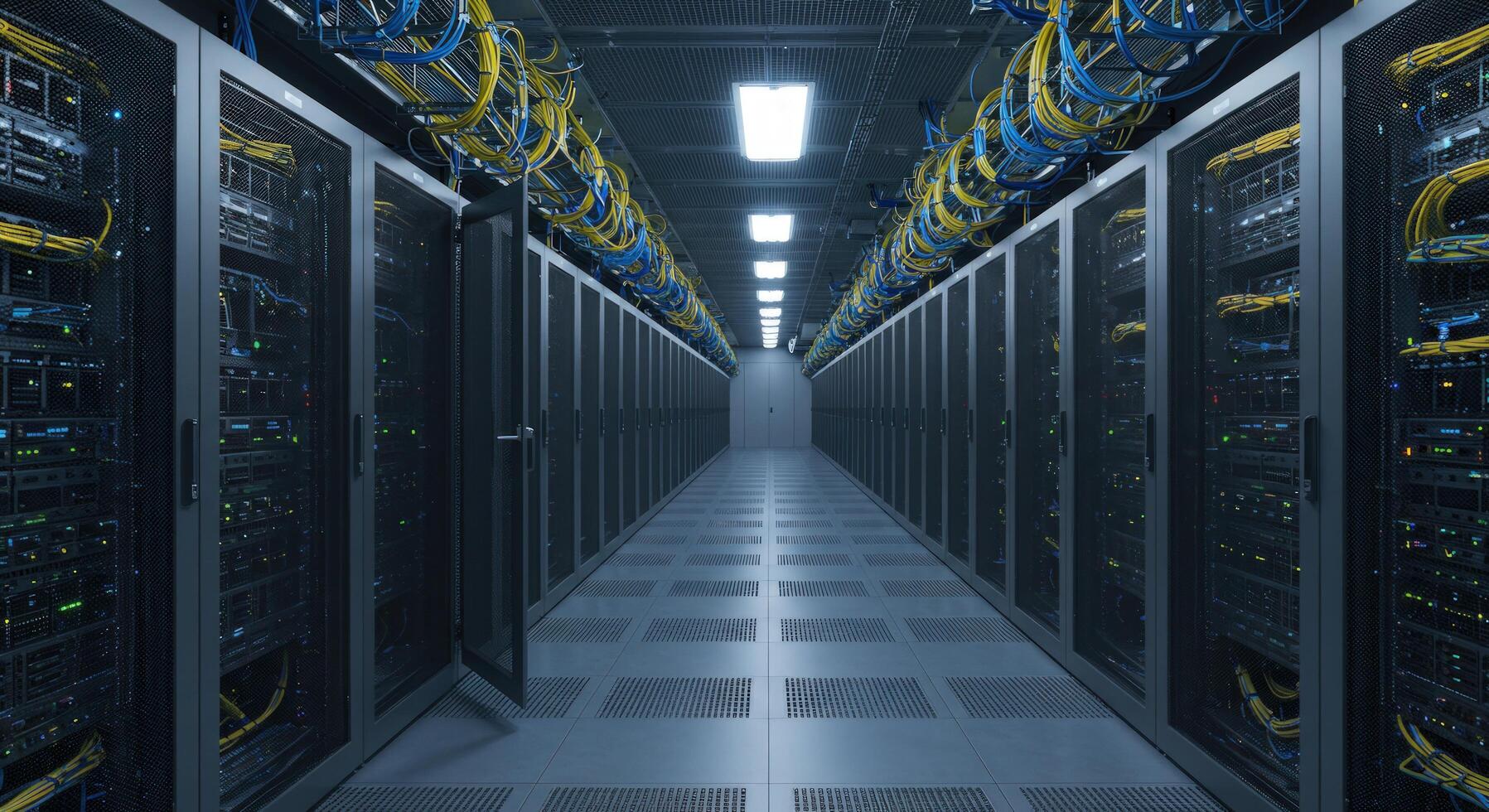
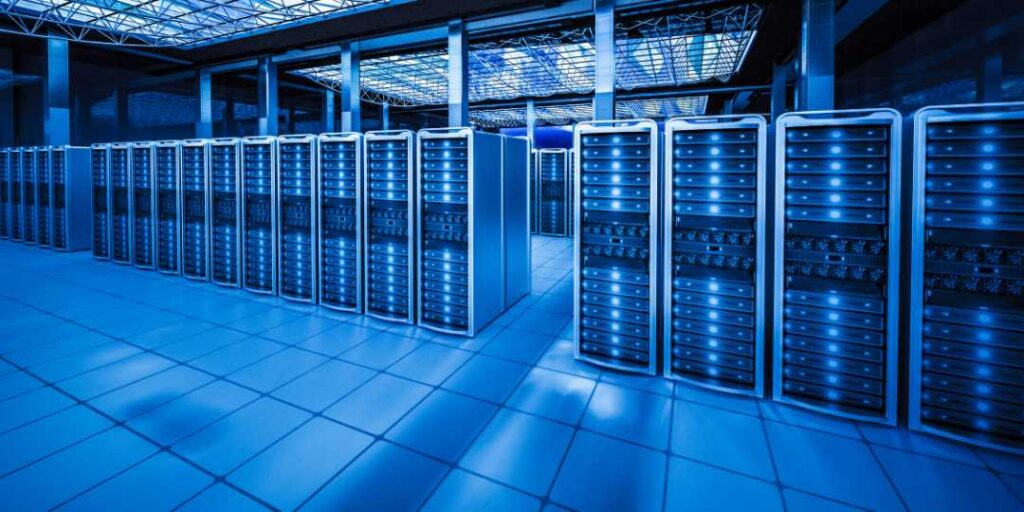
Licensed server room build-outs and data center cabling for commercial businesses and colocation tenants across Los Angeles County. Designed before it’s built — rack elevations, cable schedules, and port maps delivered before a single cable is pulled. TIA-942 compliant. C-7 licensed, BICSI certified.
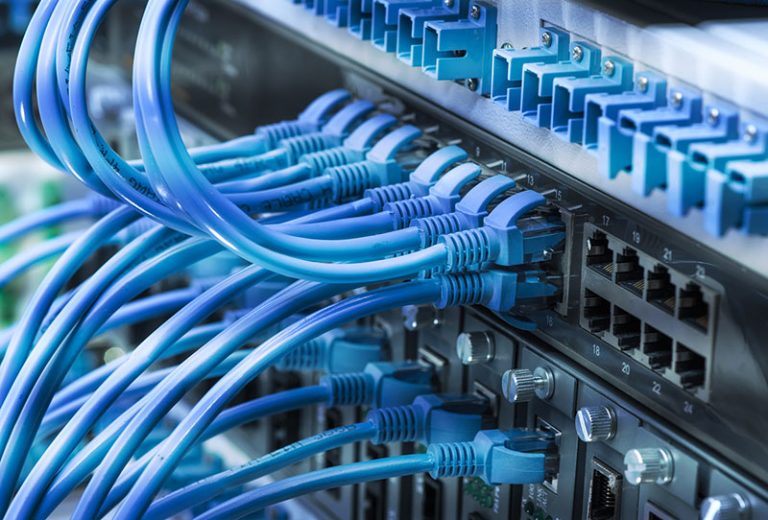
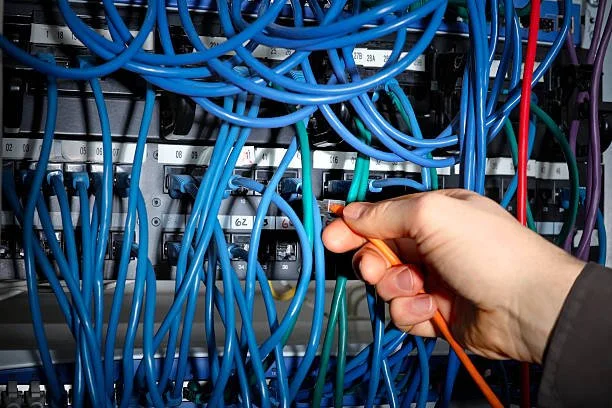
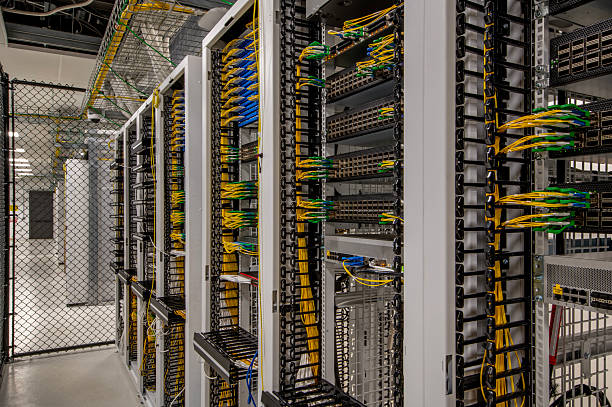
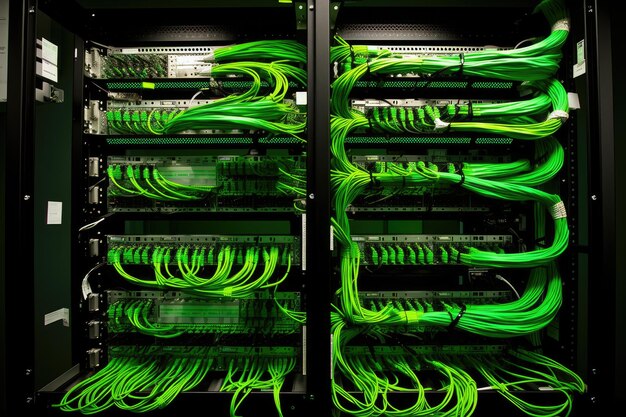
Messy wiring closets and cable runs organized, labeled, and documented properly for long-term maintainability.
Cable Management Installation
Wiring Closet Cleanup & Remediation
Cable Labeling & Documentation
Server Rooms & Data Centers Are Designed Before They’re Built
Most server room cabling problems in Los Angeles are planning problems — not installation problems. A contractor who shows up, runs cable to wherever the racks ended up, and terminates everything at a patch panel without a drawing has left you with infrastructure that’s impossible to manage, troubleshoot, or expand. We see this constantly when LA businesses call us to fix someone else’s work.
Our approach is the opposite. Before we pull a single cable, we produce a rack elevation drawing showing every unit position in every rack, a cable schedule identifying every run by ID with both endpoints, and a port map that connects every patch panel port to every device and outlet it serves. These documents are what your IT team, MSP, and future contractors need to manage your infrastructure. Producing them before installation also means we catch problems on paper — not on the job site.
Every server room build-out and data center cabling project we deliver in Los Angeles includes a complete documentation package at close: as-built drawings, rack elevations, cable schedule, port map, OTDR traces for fiber, and Fluke-certified test reports for every copper run. You own the documentation — it belongs to your facility, not to us. At LA Data Cabling Installation, we specialize in professional server room and data center cabling solutions designed for performance, scalability, and reliability.
Rack Elevation Drawings
Every unit position in every rack drawn to scale before installation begins. Equipment placement, patch panel positions, cable manager locations, blank panel fills, PDU mounting. Your IT team reviews and approves before any hardware is mounted.
Cable Schedule
Every cable identified by a unique ID with its source endpoint, destination endpoint, cable type, length, and pathway. Produced before installation and updated as-built at project close. The definitive record of what’s installed.
Port Map
Patch panel port → cable ID → device or outlet. The document your IT team needs to provision switches, troubleshoot connectivity, and manage moves, adds, and changes after the project is complete.
Certified Test Reports
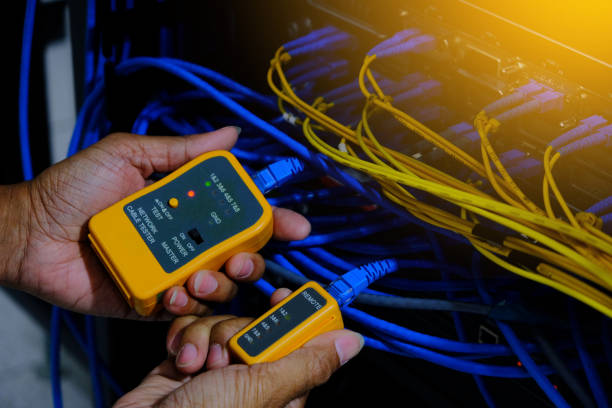
Fluke DSX-8000 Level IV certification for every copper run. Bidirectional OTDR traces for every fiber strand. Delivered as a signed PDF at project close — the same documentation your equipment vendors require for warranty compliance.
As-Built Floor Plan
A floor plan showing every rack position, cable pathway, MDF/IDF location, and power distribution point as actually installed — not as originally designed. Reflects any field changes made during the project.
Photo Documentation
A complete photo set of every rack front and rear, every patch panel, the overhead cable pathways, and the room from multiple angles. Delivered with the documentation package so you have a visual record of the completed installation.
Server Room Build-Outs — Los Angeles
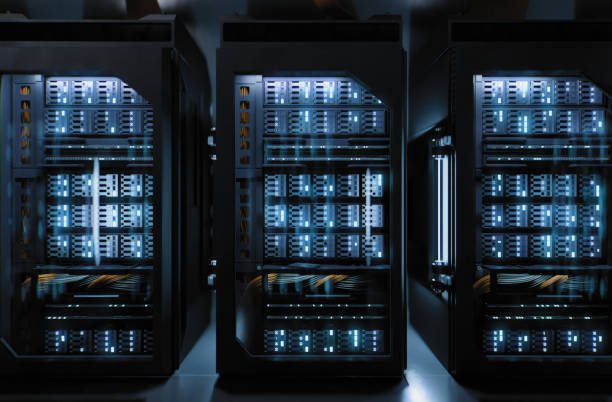
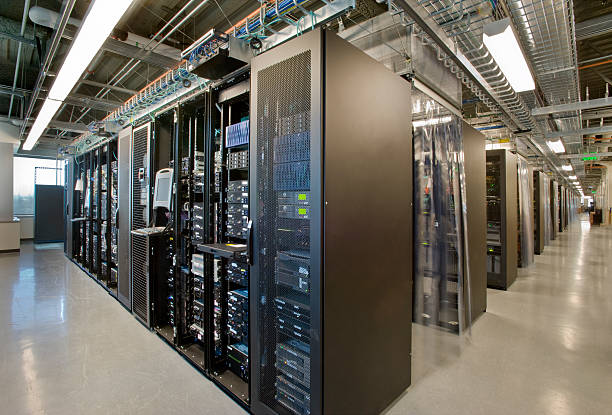
A server room build-out is a complete infrastructure project — from bare room to fully operational network core. We manage the entire cabling and physical infrastructure scope: room design and rack layout, cable tray and pathway installation, Cat6A horizontal cabling, fiber backbone, rack and patch panel installation, grounding, and power distribution hardware. Everything except the electrical circuits themselves, which require a C-10 licensed electrician we can coordinate with.
We’ve built server rooms for Los Angeles businesses of every size — single-rack IDFs in Century City offices, 8-rack server rooms in Burbank production facilities, and 20+ rack server rooms for enterprise operations in the South Bay. Every build-out starts with a site visit, a design drawing, and a fixed-price quote before any work begins.
Room Assessment & Design
We evaluate the space — dimensions, ceiling height, existing power and cooling, floor construction, and access. We produce a rack layout drawing showing equipment placement, hot-aisle/cold-aisle orientation, cable entry points, and cable tray routing before the build begins.
Cable Tray & Pathway Installation
Overhead ladder rack, wire basket tray, and conduit installed per TIA-569-D fill ratios and bend radius requirements. Copper and fiber pathways separated where required. Seismically braced overhead systems on all LA projects — required by most commercial building leases and the California Building Code.
Cat6A Structured Cabling
Cat6A horizontal cabling from patch panels to every outlet or device location. All runs are dedicated home runs — no daisy-chaining. CMP-rated cable in plenum spaces. Every run labelled, terminated, and certified to TIA-568.2-D before any equipment is powered up.
Rack & Patch Panel Installation
Two-post, four-post, or enclosed cabinet installation. Patch panel mounting and 110-punch termination. Horizontal and vertical cable managers installed before cable is dressed. Rack labelling to your naming convention. Seismic floor anchoring per LA requirements.
Fiber Backbone
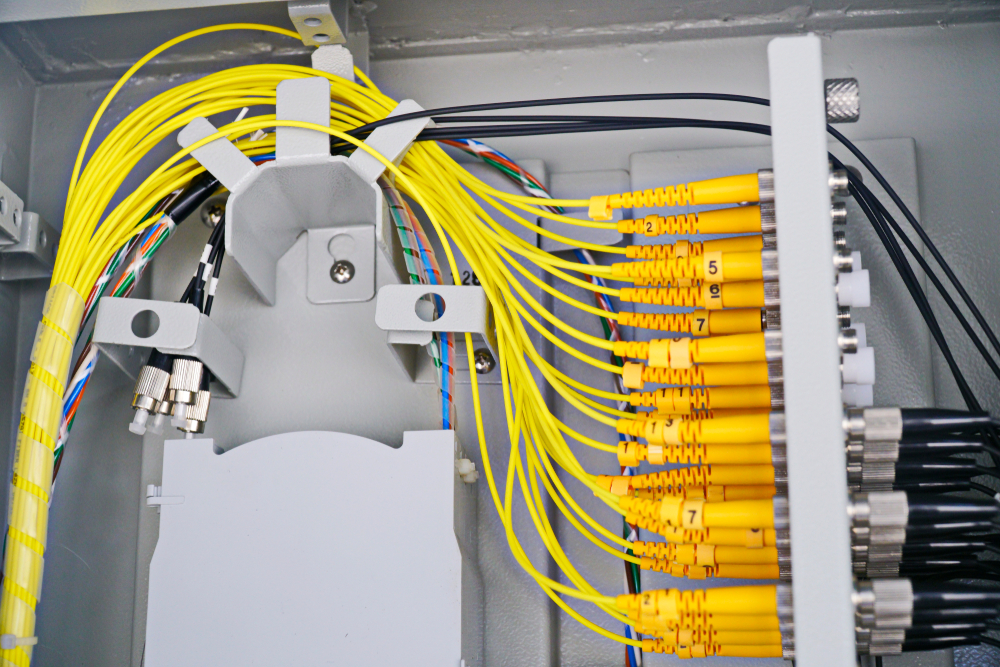
OM4 or OS2 fiber from the MDF to every IDF and between racks as required. LC or MPO/MTP terminations. Fusion-spliced connections where required. Bidirectional OTDR tested on every strand. Bend radius managed throughout — no cable ties pulling fiber around corners.
Grounding & Bonding
Telecommunications Grounding Busbar (TGB) installation, rack-to-rack bonding conductors, and all grounding infrastructure per ANSI/TIA-607-B and NEC Articles 250 and 800. The grounding infrastructure that protects your equipment and satisfies your building’s requirements.
Server Room Build-Out Deliverables
As-built floor plan with rack positions, cable pathways, and entry points
Rack elevation drawings — unit-by-unit layout for every rack
Cable schedule — every run with ID, type, length, and both endpoints
Port map — patch panel port to device or outlet, for every run
TIA-568.2-D Level IV certification reports for all copper runs
Bidirectional OTDR trace reports for all fiber strands
Full build-out: design, pathways, copper, fiber backbone, racks, grounding
3–5 days
Mid-Size Server Room
6–12 racks
Complete infrastructure project with structured cabling, fiber, PDU mounting, full docs
1–2 weeks
Large Server Room
13–30+ racks
Enterprise-grade build-out with TIA-942 topology, hot/cold aisle, overhead pathways
2–4 weeks
Data Center Cabling — Los Angeles
Data center cabling demands a higher level of precision than general structured cabling — longer runs, higher densities, more stringent bend radius requirements, and zero tolerance for downtime during the installation. We install structured cabling, copper and fiber, for data centers and large server rooms in Los Angeles to ANSI/TIA-942-B standards.
The Los Angeles data center market is concentrated in Downtown LA, El Segundo, and the South Bay corridor — facilities including CoreSite LA1/LA2, Equinix LA, CyrusOne, and numerous carrier-neutral facilities. We work as tenant cabling contractors in these facilities, following facility-specific procedures, change management windows, and cable pathway standards.
Top-of-Rack (ToR) Cabling
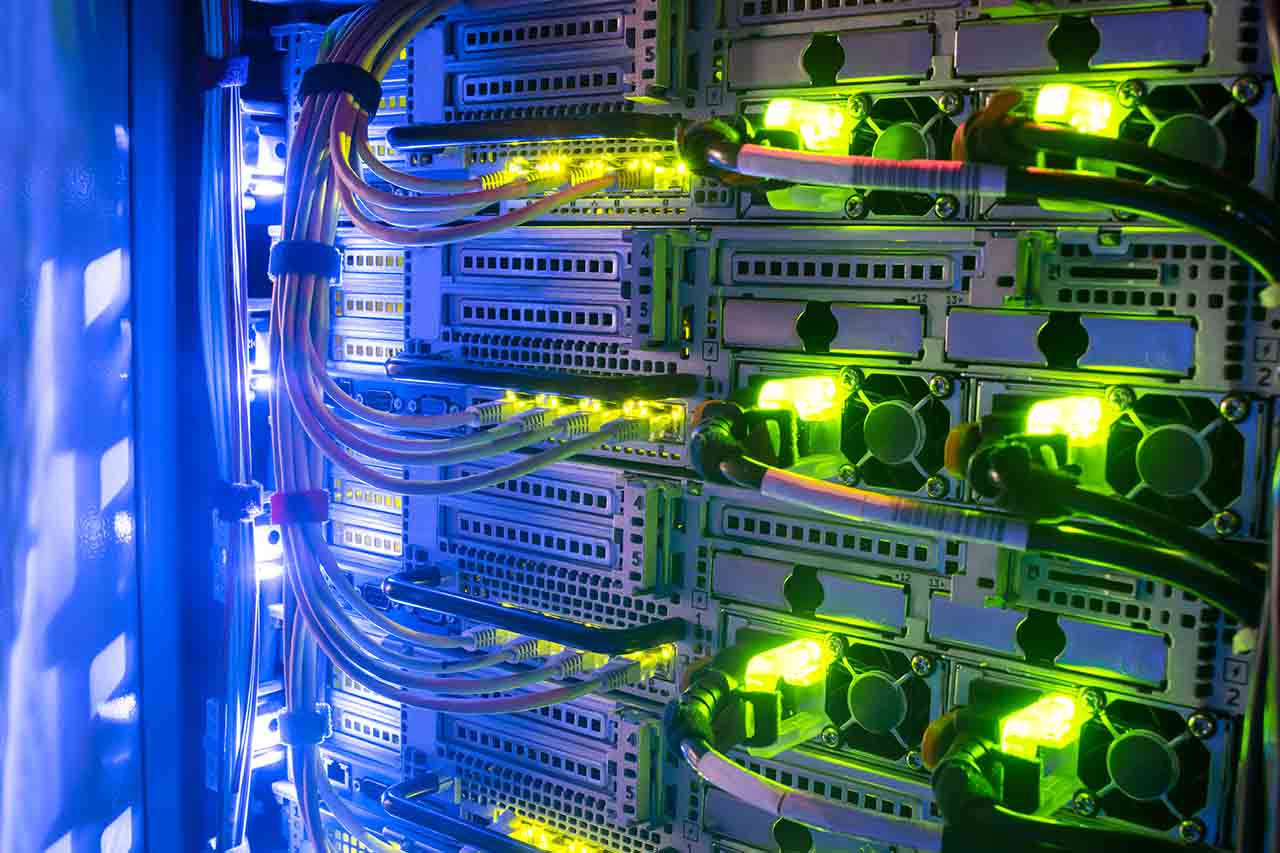
Cat6A copper and OM4/OS2 fiber from top-of-rack switches to distribution frames. Properly dressed rear-of-rack with correct bend radius, strain relief, and velcro management. Every run labelled, tested, and documented before the switch is powered up.
Overhead Ladder Rack & Trays
Overhead cable management installation — ladder rack, wire basket, and cable tray — with copper and fiber segregated per TIA-569-D. Properly supported with correct hanger spacing, grounded metallic pathways, and weight loading calculations. Seismically braced in all LA installations.
Under-Floor Cabling
Raised-floor routing for data centers with existing under-floor infrastructure. Floor cutout sealing with fire-rated grommets, under-floor pathway documentation, and proper cable support. Compliant with TIA-569-D under-floor space requirements.
High-Density Fiber
MPO/MTP trunk systems, fiber cassette enclosures, and pre-terminated fiber arrays for 40G/100G/400G deployments. Pre-terminated trunk installation and fusion splicing for custom lengths. Every fiber strand OTDR tested bidirectionally.
In-Row & End-of-Row Cabling
In-row and end-of-row switching infrastructure cabling — structured to TIA-942-B HDA (Horizontal Distribution Area) topology. Clean, maintainable cable routing that supports the hot-aisle/cold-aisle design of the data center floor.
Zone Distribution (MDA→HDA→EDA)
TIA-942-B compliant zone distribution topology: Main Distribution Area to Horizontal Distribution Area to Equipment Distribution Area. Scalable infrastructure that can accommodate future equipment additions without re-cabling the entire zone.
Data Center Cabling Deliverables
As-built data center floor plan — rack locations, pathways, distribution frames
Cable schedule — every run, end-to-end connectivity, label IDs
TIA-568.2-D certification reports for all copper runs
Bidirectional OTDR trace reports for all fiber strands
Overhead pathway as-builts — plan view and section
Photo documentation — every pathway, rack, and panel
Facility cross-connect records (for colo facilities)
STANDARD
SCOPE
WHY IT MATTERS
ANSI/TIA-942-B
Data center infrastructure and tier definitions
Defines MDA/HDA/EDA topology, pathway requirements, and tiered availability
ANSI/TIA-568.2-D
Copper cabling performance testing
Required for Cat6A certification — every copper run in a data center
ANSI/TIA-568.3-D
Fiber optic cabling performance testing
Required for single-mode and multimode fiber certification
ANSI/TIA-569-D
Pathways and spaces
Cable tray sizing, fill ratios, bend radius, support spacing
Grounding requirements and plenum-rated cable requirements
Colocation Cage & Suite Build-Outs — Los Angeles
Deploying infrastructure in a Los Angeles colocation facility requires a contractor who understands the facility environment — not just cabling. Escorted access, specific cable pathway rules, change management windows, MMR (Meet-Me Room) cross-connect procedures, and COI requirements all apply before a single rack goes on the floor.
We’ve built colocation cages and suites for Los Angeles tenants at major facilities across the Downtown LA, El Segundo, and South Bay data center corridor. We handle the end-to-end physical infrastructure scope within the tenant’s footprint — racks, overhead cabling to the MMR, structured cabling within the cage, and all documentation the facility requires.
Rack Installation & Anchoring
Rack delivery coordination, assembly, floor anchoring to raised floor or concrete slab, and seismic bracing per LA requirements and facility standards. Colo facilities often have specific rack models or mounting requirements — we comply with facility standards.
Overhead Cabling to MMR
Fiber and copper runs from the tenant cage overhead to the facility’s Meet-Me Room (MMR) or Main Distribution Frame (MDF). Routed per facility-specified overhead pathways, labelled to facility cross-connect standards, and documented with the facility records team.
Intra-Cage Structured Cabling
Cat6A copper and fiber cabling within the cage — from patch panels to every rack, within and between cabinets, and to any shared or demarcation infrastructure within the footprint. Properly dressed, labelled, and documented.
Cross-Connect Coordination
Coordination with the facility’s cross-connect team for MMR terminations, carrier circuit hand-offs, and facility-managed patch panels. We understand the facility cross-connect process and can manage the coordination with the facility operations team so you don’t have to.
Power Distribution Hardware
PDU rack mounting and cable management hardware within the cage. Electrical circuit work feeding PDUs requires a C-10 licensed electrician — we coordinate with the facility’s approved electrical contractor or one you provide.
Cage Expansion Cabling
Expanding an existing LA colo deployment — adding racks, extending overhead pathways, adding new cross-connects, or re-cabling a cage that’s outgrown its original infrastructure. We work in live environments without causing downtime to existing systems.
Colocation Build-Out Deliverables
Cage floor plan as-built with rack positions and overhead pathway routing
Rack elevation drawings for every cabinet in the cage
Cable schedule — every run within cage and to MMR
Facility cross-connect records for all MMR terminations
TIA-568.2-D certification reports for all copper runs
Bidirectional OTDR traces for all fiber strands
Photo documentation of cage, racks, overhead pathways, and MMR connections
Data Cabling Services Across Los Angeles County
We serve commercial businesses throughout Los Angeles County and surrounding areas. Our crews are local — based in LA, familiar with every neighborhood.
Downtown LA
Santa Monica
Century City
West Hollywood
Culver City
Hollywood
Koreatown
Mid-Wilshire
Burbank
Glendale
Van Nuys
Sherman Oaks
Woodland Hills
Chatsworth
El Segundo
Torrance
Manhattan Beach
Hawthorne
Inglewood
Pasadena
Alhambra
City of Industry
Long Beach
San Pedro
Compton
Fiber Optic Backbone & MDF-IDF Infrastructure — Los Angeles
The fiber backbone is the spine of your Los Angeles building’s network infrastructure — the connections between the MDF (Main Distribution Frame) in your server room and every IDF (Intermediate Distribution Frame) on each floor. A poorly designed or installed fiber backbone creates bottlenecks, single points of failure, and upgrade constraints that are expensive to fix after the fact.
We install OM4 multimode and OS2 single-mode fiber backbone cabling for commercial buildings across Los Angeles — from a single two-floor connection to multi-floor high-rise infrastructure with redundant paths. All fiber is OTDR tested bidirectionally on every strand, and we deliver the trace reports as part of the documentation package.
OM4 Multimode Fiber
OM4 50/125 multimode for MDF-to-IDF connections supporting 10G (10GBASE-SR) to 400m and 25G/40G/100G at shorter distances. The right choice for intra-building backbone in most Los Angeles commercial buildings where the longest run is under 150m.
OS2 Single-Mode Fiber
OS2 9/125 single-mode for longer building spans, inter-building connections, and future-proofed infrastructure. Supports 10G, 40G, 100G, and beyond at distances to 10km+. Required for campus environments and large LA facilities with long riser distances.
LC & MPO/MTP Terminations
LC duplex terminations for standard MDF-IDF backbone connections. MPO/MTP 12-fiber and 24-fiber array terminations for high-density data center applications and 40G/100G structured cabling systems. Pre-terminated assemblies and field-
Fusion Splicing
Fusion splicing for custom lengths, damaged fiber repair, and high-performance backbone runs where connector-to-connector insertion loss must be minimized. We carry a Fujikura arc fusion splicer and deliver OTDR-verified splice performance data.
Fiber Patch Panel Installation
LC, SC, and MPO/MTP fiber patch panels at MDF and IDF locations. Properly mounted in racks, with correct bend radius management for the incoming cables, and organised routing that allows individual fibers to be accessed and patched without disturbing adjacent connections.
OTDR Testing & Certification
Bidirectional OTDR testing on every fiber strand — measuring insertion loss, return loss, splice performance, and connector quality. Delivered as a PDF trace report for every strand, from both ends. The documentation your equipment vendors require for transceiver warranty compliance.
Fiber & Backbone Deliverables
Fiber backbone routing drawing showing every run, pathway, and termination point
Cable schedule — every fiber cable with strand count, type, and both endpoints
Bidirectional OTDR trace reports for every strand (A-to-B and B-to-A)
Insertion loss measurements for every connection
Splice performance data where fusion splicing was performed
Fiber panel labelling documentation — panel, adapter position, and strand ID
Photo documentation of fiber panels, splice enclosures, and pathway routing
FIBER TYPE
CORE/CLAD
10G DISTANCE
100G DISTANCE
BEST FOR
OM3 Multimode
50/125 µm
300m
100m
Legacy — reuse only, not for new installs
OM4 Multimode
50/125 µm
400m
150m
Intra-building backbone in LA commercial buildings
OM5 Multimode
50/125 µm
400m
150m+
Wideband multimode — future WDM applications
OS2 Single-Mode
9/125 µm
10,000m
10,000m+
Long runs, campus, inter-building, future-proof
TIA-942 & Industry Standards for Los Angeles Server Rooms & Data Centers
Every server room and data center project we deliver in Los Angeles is designed and installed to the applicable ANSI/TIA standards. Here’s what those standards mean and why they matter for your infrastructure.
ANSI/TIA-942-B — Data Center Infrastructure
The governing standard for data center cabling topology, tier definitions, and infrastructure design. Defines the MDA (Main Distribution Area), HDA (Horizontal Distribution Area), ZDA (Zone Distribution Area), and EDA (Equipment Distribution Area) topology — the architecture that makes data center cabling scalable and maintainable. We follow TIA-942-B topology for all LA server room and data center projects, not just enterprise facilities.
ANSI/TIA-569-D — Pathways & Spaces
Governs cable tray sizing, fill ratios, bend radius requirements, support spacing, and the physical spaces that contain cabling infrastructure. When we size a ladder rack for a Los Angeles server room, calculate how many cables can safely run through a conduit, or specify the minimum depth of a cable management arm, TIA-569-D is what we’re referencing. Most contractors eyeball this. We calculate it.
ANSI/TIA-607-B — Grounding & Bonding
Specifies the grounding and bonding infrastructure for telecommunications — TGB (Telecommunications Grounding Busbar) installation, rack bonding conductors, and the connection to the building’s main electrical ground. Combined with NEC Articles 250 and 800, this is what protects your server room equipment from voltage surges and satisfies LA commercial building requirements.
California Seismic Requirements
Los Angeles is in Seismic Design Category D under the California Building Code, which references ASCE 7. Most LA commercial leases and building management companies require seismic anchoring for server room equipment — floor-anchor kits for racks, seismic bracing for overhead cable tray, and four-post bracing for tall free-standing cabinets. We assess, specify, and install the appropriate seismic hardware on every LA project.
NEC Articles 250 & 800
NEC Article 250 governs electrical grounding requirements for all building systems, including telecommunications infrastructure. NEC Article 800 governs communications circuits — including the requirement for plenum-rated (CMP) cable in air-handling spaces. Most LA commercial buildings have plenum-rated ceiling and floor spaces, making CMP cable a code requirement, not just a preference.
ANSI/TIA-568.2-D & 568.3-D — Testing Standards
TIA-568.2-D defines the performance requirements for copper cabling — the parameters a Fluke DSX-8000 measures when certifying a Cat6A run. TIA-568.3-D defines the performance requirements for fiber optic cabling. Every run we test is tested against these standards. Not “we tested it and it worked” — certified to the standard, with the test report to prove it.
Why Los Angeles Businesses Choose Us for Server Room & Data Center Projects
Server room cabling done right is an infrastructure asset. Done wrong, it’s a liability that follows your business for years.
Designed Before It’s Built
Rack elevation drawings, cable schedules, and port maps before installation begins — not after. Your IT team reviews and approves the design. Problems are caught on paper, not on the job site. This is how professional server room infrastructure is built.
CA C-7 Licensed for All LA Commercial Work
Every low-voltage cabling contractor working in a Los Angeles commercial building is required to hold a California C-7 Low Voltage Contractor License. Our license number (#1234567) is verifiable at the CSLB. For a server room project with tens of thousands of dollars of equipment at stake, the contractor’s license matters.
BICSI Certified Technicians
BICSI is the global standard body for ICT installation. Our BICSI-certified technicians have been trained and tested on the installation standards that govern server room and data center cabling — from telecom room design to grounding infrastructure to TIA-942 topology. Not every LA cabling contractor has BICSI-certified installers on the crew.
LA Seismic Expertise
We understand the seismic anchoring requirements for Los Angeles server rooms — building lease requirements, the California Building Code seismic hazard zone, and the hardware required for racks, cabinets, and overhead cable tray. Every LA server room project we deliver includes appropriate seismic anchoring, and we document it.
Colo Facility Experience
We maintain active access relationships at major Los Angeles colocation facilities. We know the facility-specific procedures, change management windows, COI requirements, and cable pathway standards before we arrive. You don’t have to brief us on how to operate in a professional data center environment.
Full Documentation — No Exceptions
We have never delivered a server room project without a complete documentation package. Rack elevations, cable schedule, port map, test reports, and photos are delivered at every project close. Your IT team and future contractors have everything they need. This is not negotiable for us, and it shouldn’t be for you.
CA C-7 Low Voltage License
BICSI Registered Installer
ANSI/TIA-942-B Compliant
ANSI/TIA-569-D Pathways
ANSI/TIA-607-B Grounding
Seismic Rack Anchoring
Fluke DSX-8000 Certified
Colo Facility Access
Our Server Room & Data Center Project Process
The same disciplined process for every project — from a single-rack IDF in a West LA office building to a 20-rack data center build-out in El Segundo.
Free Site Survey
We visit your Los Angeles location to walk the server room or data center space, assess existing infrastructure, ceiling height, floor construction, power and cooling layout, riser pathways, and building access requirements. For colocation projects we assess the cage or suite footprint and review facility requirements. You receive a site survey report for larger projects detailing what we found and what we recommend.
Design & Documentation Package
Before quoting, we produce the design documents: rack elevation drawing showing every rack unit position, cable tray routing plan showing pathway layout and sizing, and a cable schedule identifying every run by ID with endpoints. For larger projects we also produce a fiber backbone routing drawing. You review and approve the design before we quote — changes at the drawing stage cost nothing. Changes after installation begin are expensive.
Fixed-Price Quote Within 24 Hours
You receive a fixed-price quote covering every element of the scope: cable and materials, installation labour, testing equipment time, and documentation deliverables. No hourly billing. No change orders for work within the agreed scope. For LA projects in occupied buildings, the quote includes any after-hours or weekend installation time required.
Pathway & Infrastructure Installation
Cable tray, conduit, rack hardware, and grounding infrastructure are installed before any cable is pulled — in the correct order. Seismic anchoring for racks and overhead systems. TIA-569-D fill ratios and bend radius requirements are met from the start, not retrofitted after the cable is already in. Fire-rated penetrations are sealed with listed firestopping materials where required by LA building code.
Cabling, Termination & Dress
Cat6A copper and fiber backbone are pulled through pathways, terminated at patch panels, labelled to the cable schedule IDs, and dressed into cable management hardware. Every copper run is terminated to TIA-568.2-D standard. Fiber connections are inspected with a fiber microscope before mating. Velcro management throughout — no cable ties on copper, no cable ties pulling fiber.
Testing & Certification
Fluke DSX-8000 CableAnalyzer certification to TIA-568.2-D Level IV for every copper run. Bidirectional OTDR testing for every fiber strand. Any run that fails is re-terminated and retested before the project closes. You receive signed test reports for every run — the documentation your equipment vendors, building management, and insurance may require.
Documentation Package & Handoff
At project close you receive the complete documentation package: as-built floor plan, rack elevation drawings (updated to reflect any field changes), cable schedule, port map spreadsheet, test reports for all copper runs, OTDR traces for all fiber strands, and a photo set of every rack, panel, and pathway. For colo projects, facility cross-connect records are included. Manufacturer warranty registration is completed for all cable and hardware.
Server Room & Data Center Projects Across LA
Los Angeles has one of the most diverse commercial building and data center environments in the country. Here’s how we approach the most common project types we handle.
DTLA High-Rise Server Rooms
Multi-floor office buildings in Downtown LA typically have one MDF server room and per-floor IDFs connected by riser fiber. Concrete construction means fire-rated penetration sealing is mandatory. Building management coordination required for riser access. We’ve built and upgraded server rooms in DTLA’s major towers on Wilshire, Figueroa, and Grand.
Century City & West LA Law Firms
Century City’s Class A office towers house hundreds of law firms with server rooms ranging from a single IDF closet to 10-rack on-premise infrastructure. High expectations for quality, documentation, and after-hours work to avoid disrupting the firm. We’ve built server rooms for law firms throughout the Century City and Westside corridor.
Entertainment & Production — Burbank, Hollywood
Burbank and Hollywood production companies often have complex server room requirements — high-density storage and rendering infrastructure, multiple riser paths between buildings on a studio campus, and the need to maintain existing production systems while upgrading infrastructure. We’ve built and expanded server rooms at production facilities throughout the entertainment district.
El Segundo & South Bay Tech Companies
The El Segundo and South Bay tech corridor houses aerospace, defense, and technology companies with enterprise server room requirements — high-density racks, 40G/100G fiber infrastructure, and formal TIA-942 compliance requirements. We build server rooms and colo deployments throughout the South Bay tech market.
LA Colocation Facilities
Tenant cage and suite build-outs at CoreSite LA1/LA2 at One Wilshire, Equinix LA, and other LA colo facilities. We understand the facility environments, follow the change management process, and carry the COI requirements. Build-out or expansion — we’ve done both.
Healthcare & Medical Facilities
Medical centers and healthcare organizations in LA require server room infrastructure that meets HIPAA security standards for physical access, has documented installation records, and can support the high-availability requirements of clinical systems. We understand the documentation and access control requirements for healthcare server rooms.
Financial Services — Mid-Wilshire, DTLA
Financial services firms in Los Angeles have stringent requirements for server room documentation, change control, and physical security. Every project deliverable we provide — rack elevations, cable schedules, certified test reports — meets the documentation standards these environments require.
Warehouse & Industrial — City of Industry, South Bay
Distribution centers and industrial facilities in the City of Industry, Torrance, and South Bay corridor often have server room or network equipment room requirements alongside warehouse WiFi and data networking. We build the server room infrastructure and the warehouse network drops in the same project scope.
Server Room & Data Center Cabling Across Los Angeles County
Our crews are LA-based and serve the entire county. No travel surcharges within LA County.
Los Angeles Core
Downtown LA
Century City
West Hollywood
Santa Monica
Culver City
Hollywood
Mid-Wilshire
Playa Vista
Brentwood
Westwood
Marina del Rey
Koreatown
Entertainment & Media District
Burbank
Glendale
Studio City
North Hollywood
Van Nuys
Sherman Oaks
Woodland Hills
South Bay & Data Center Corridor
El Segundo
Torrance
Manhattan Beach
Hawthorne
Inglewood
Redondo Beach
Gardena
East LA / San Gabriel Valley
Pasadena
Alhambra
City of Industry
El Monte
Arcadia
Montebello
Long Beach & Harbor Area
Long Beach
San Pedro
Wilmington
Carson
Compton
Server Room & Data Center Cabling FAQ — Los Angeles
Server room build-out costs in Los Angeles vary significantly based on scope. As a rough guide: a single-rack IDF closet with cable tray, Cat6A drops, patch panel, fiber uplink, and grounding typically runs $2,500–$5,000. A 3–5 rack server room complete build-out (cable tray, copper, fiber backbone, racks, patch panels, grounding) typically runs $12,000–$28,000. A 10–20 rack enterprise server room build-out typically runs $35,000–$90,000+.
Variables that significantly affect Los Angeles pricing include: whether the room already exists or requires buildout, the scope of cable tray and pathway work, number of Cat6A drops, fiber strand count, documentation level required, seismic anchoring requirements, and whether after-hours access is required for an occupied building. We provide fixed-price quotes after a free site survey — so you know the exact cost before any work begins.
The MDF (Main Distribution Frame) is the central point of your building’s telecommunications infrastructure — typically located in the main server room or main telecom room. This is where your ISP connection enters the building, where the fiber backbone originates, where your core network switches and routers live, and where the building’s main patch panels are located.
The IDF (Intermediate Distribution Frame) is a satellite telecom room on each floor or zone of the building, connected back to the MDF via the building’s fiber backbone. The IDF contains the floor switches, the patch panels serving that floor’s structured cabling drops, and any floor-level network equipment. A typical multi-floor Los Angeles office building has one MDF and one IDF per floor, connected by riser fiber. In TIA-942-B terminology applied to buildings, the MDF corresponds to the MDA and each IDF corresponds to an HDA.
In most cases, yes — or at minimum it’s strongly advisable. Los Angeles is in Seismic Design Category D under the California Building Code, which references ASCE 7 for nonstructural component requirements. Many commercial building leases in Los Angeles explicitly require seismic anchoring for heavy equipment, and many building management companies and insurance policies require it for server room equipment.
Seismic anchoring for server rooms typically means floor-anchor kits for open-frame racks bolted to concrete slab (or raised floor anchoring systems for raised-floor environments), four-post bracing kits for free-standing enclosed cabinets, and seismic bracing straps or cross-bracing for overhead cable tray systems. We assess the specific anchoring requirements during the site visit, recommend the appropriate hardware, and include it in the project scope. If your building management or lease requires a seismic compliance statement, we document the anchoring installation.
Yes. The majority of our Los Angeles server room and data center projects take place in occupied buildings. Server room build-outs in occupied buildings require coordination with building management for after-hours riser access, fire-rated penetration permits, COI requirements, and construction access procedures — all of which we manage as part of the project scope.
For active server rooms where we’re expanding or upgrading existing infrastructure, we plan the work carefully to avoid taking down systems that are in production. This often means sequencing the installation so new infrastructure is complete and tested before old infrastructure is decommissioned, working during maintenance windows, and coordinating power-off periods with the IT team. We’ve built and upgraded server rooms in occupied DTLA high-rises, Century City towers, and Burbank production facilities without a single unplanned outage
ANSI/TIA-942-B is the telecommunications infrastructure standard for data centers. It defines four availability tiers (Tier I through Tier IV), specifies the cabling topology using the MDA/HDA/ZDA/EDA zone architecture, and provides requirements for pathways, spaces, grounding, and environmental systems. Formal tier certification requires third-party audit and is typically required only for purpose-built colocation and enterprise data center facilities.
For most Los Angeles commercial server rooms, formal TIA-942 tier certification is not contractually required — but following TIA-942 topology principles produces better-organised, more scalable, and more maintainable infrastructure. We design all server room and data center projects to TIA-942 topology by default, because the result is better regardless of whether certification is required. If your facility, lease, or compliance framework requires formal TIA-942 certification, that’s a separate process involving a third-party auditor — we can advise on what’s required and ensure our installation meets the physical infrastructure requirements.
We install PDU (Power Distribution Unit) mounting hardware within racks and mount PDUs as part of the rack installation scope. We do not perform electrical circuit work — running conduit, pulling electrical wire, installing breaker panels, or making connections to the building’s electrical distribution system. This work requires a California C-10 Electrical Contractor license, which we do not hold.
For server room build-outs that require new electrical circuits to feed PDUs, we coordinate with a C-10 licensed electrical contractor — either one you provide or one we work with regularly in the Los Angeles area. We sequence our cabling work around the electrical contractor’s schedule to ensure the project timeline stays on track. We’ve coordinated hundreds of server room projects with electrical contractors across LA County.
Timeline depends heavily on scope and building access. As a rough guide: a single-rack IDF installation typically takes 1 day. A 3–5 rack server room build-out typically takes 3–5 days. A 10–20 rack server room build-out typically takes 1.5–3 weeks for the cabling scope, not including the electrical contractor’s work for circuits.
In Los Angeles, building access coordination — particularly in DTLA and Century City high-rises — can significantly affect the schedule. After-hours riser access, fire-rated penetration permits, and building management approval processes for occupied buildings add lead time that needs to be built into the project timeline. We assess building-specific access constraints during the site visit and build realistic timelines that account for the realities of LA commercial building management.
For most Los Angeles commercial office buildings, OM4 multimode fiber is the right choice for MDF-to-IDF backbone cabling. OM4 supports 10GBASE-SR to 400m and 25G/40G/100G at shorter distances — more than sufficient for intra-building backbone runs in buildings where the longest riser run is typically under 100m. OM4 transceivers (850nm VCSEL) are significantly less expensive than OS2 single-mode transceivers, which matters when you have 10–20 switch ports to equip.
OS2 single-mode fiber is the right choice for: campus environments with runs over 300m, inter-building connections, and future-proofed installations where the cost of single-mode transceivers is acceptable in exchange for essentially unlimited distance capability. Some LA businesses also choose OS2 for new installations specifically to never have to replace the fiber regardless of what network speeds or distances the future requires. We advise on the right fiber type for your specific LA building during the design phase — there’s no universal answer, but there is a right answer for your situation.
What Los Angeles Businesses Say About Our Server Room & Data Center Work
★★★★★ 5.0 · 127 Google Reviews — from enterprises, production facilities, law firms, and colocation tenants across LA County.
“Eight-rack server room build-out from scratch in our DTLA financial services office — cable tray, 200 Cat6A drops, fiber backbone, full TGB grounding, seismic anchoring, the whole scope. Immaculate installation. The rack elevation drawings and port map they delivered were better documentation than anything I’ve received from any contractor in 15 years of managing IT infrastructure in Downtown LA.”
Brian M. VP Infrastructure · Financial Services, Downtown LA
“Colocation cage build-out at our El Segundo data center facility — six racks, overhead cabling to the MMR, structured cabling within the cage, all the facility cross-connect coordination. They knew the facility’s procedures before they showed up, worked within the change management windows without issue, and delivered complete as-builts and OTDR traces for every fiber strand. Professional operation throughout.”
Scott P. Network Architect · Colocation Tenant, El Segundo
“Complete server room rebuild for our Burbank production facility after we outgrew the original infrastructure. They designed the new rack layout before touching anything, showed us the rack elevations and cable schedule, and we approved it all before the first cable was pulled. The room now looks like a properly engineered data center instead of the accumulation of decisions made over ten years.”
Marcus R. Director of Technology · Production Facility, Burbank
“We needed to expand our Century City server room while keeping the existing infrastructure live — they sequenced everything so nothing was ever down unexpectedly. New cable tray overhead, extended fiber backbone to two new racks, re-dressed the existing cabling, and delivered updated as-builts and rack elevations. The expanded room is cleaner than the original ever was.”
Jennifer L. IT Director · Law Firm, Century City
The Complete Physical Layer for Your Los Angeles Infrastructure
Server rooms and data centers are the core of your network. These services connect everything else to it.
Structured Cabling
Cat6A copper cabling for every drop across your building — the runs that connect to your server room.